


How to Optimize the Use of My Air Conditioner
Stay Cool at a Lower Cost
Summer heat is here, and you’re already dreading your electricity bill at the end of the month because of your air conditioner. Don’t panic — we’ve put together a list of best practices to help you make the most of your cooling system while keeping costs down.
The Different Types of Air Conditioners
Air conditioners can be fixed or portable.
Fixed units require the installation of a vent to evacuate hot air outside. In the same category, you’ll find split air conditioners, which consist of two parts:
-
one unit inside the room to be cooled,
-
another unit outside to release the warm air.
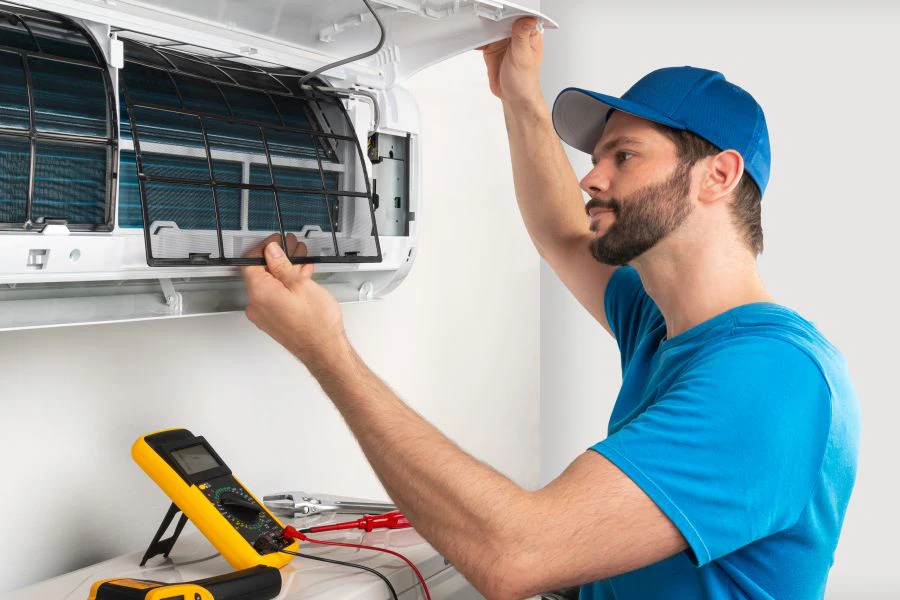
Installing these systems requires more extensive work and should be handled by a professional. They’re best suited for regions where air conditioning is needed for a significant part of the year.
Some split air conditioners are reversible. They work as heat pumps, providing both cooling in summer and heating in winter.
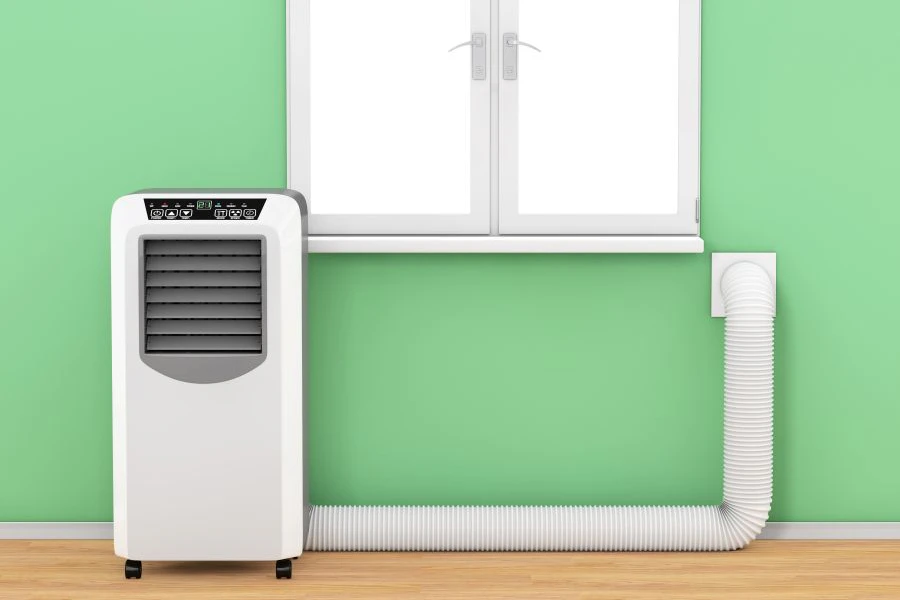
If you want to avoid installation constraints, you can choose a portable air conditioner. These units are more affordable and perfect for occasional use during heatwaves. Since they’re equipped with wheels, they can be moved easily from room to room. However, portable units still need to expel warm, humid air outdoors — usually through a hose connected to a slightly open window or door.
Be aware that this setup lets warm air back in, reducing efficiency. From an environmental standpoint, portable air conditioners aren’t very eco-friendly. To improve performance and reduce energy loss, use a window sealing kit, which maintains better insulation. This kit can be installed temporarily on a partially open window or in place of a windowpane.
Choosing the Right Power Level
The cooling power (in watts) of your air conditioner should match the size of the room.
If it’s underpowered, the unit will run constantly, wearing out faster, making more noise, and consuming more electricity.
As a rule of thumb (with a ceiling height of 2.5 m):
-
For 10 m², you’ll need 1 kW of cooling power.
Most portable air conditioners have between 2,000 and 3,500 W, ideal for rooms from 15 m² to 40 m².
Saving Energy
Like all household appliances, air conditioners are classified by energy efficiency ratings, ranging from A+++ (most efficient) to G (least efficient). This information can be found on the energy label.
Opt for a unit rated at least A+ or higher.
If your device includes eco mode or night mode, use them whenever possible.
When you’re away for more than an hour, turn off your portable air conditioner — these units cool rooms quickly once switched on, much like a car’s air conditioning system.
However, avoid turning off heat pumps or inverter air conditioners, which are designed to regulate temperature efficiently over time.
Noise Levels
Because air conditioners include fans, they naturally produce noise.
The sound power (expressed in decibels, dB) is listed on the energy label:
-
Below 50 dB → very quiet.
-
Between 50 dB and 60 dB → audible but acceptable.
-
Above 60 dB → quite noisy.
If possible, choose a model with a night mode, which reduces fan speed and noise for nighttime use.
Practical Tips for Use
Portable air conditioners should be placed close to the window or door used for air exhaust, as the hose is generally no longer than 3 meters.
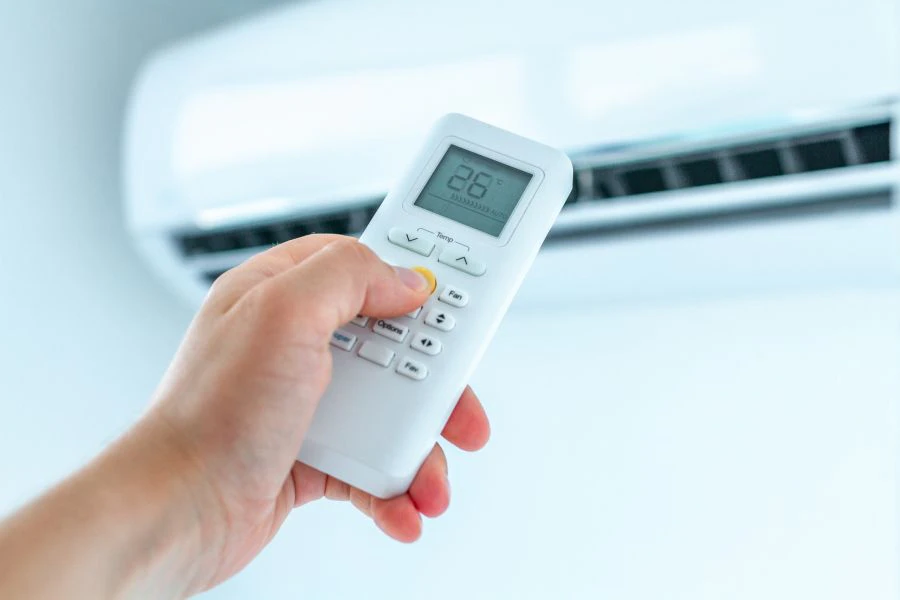
You don’t need to set the temperature too low to feel comfortable — a 5 °C difference between indoor and outdoor temperature is usually enough.
Avoid setting a difference of more than 7 °C, as it can cause thermal shock and increase the risk of colds or sore throats.
Finally, keep the humidity level in your room between 40% and 60% for optimal comfort.
Maintenance
The filters of your air conditioner must be regularly cleaned or replaced, according to the manufacturer’s recommendations.
When restarting the unit after a long period of inactivity, it’s advisable to run the ventilation mode without cooling for about one hour to remove any residual moisture. The same operation should be carried out at the end of the season, before storing the appliance.