




How can I optimize the use of my dishwasher?
Tips to Optimize the Use of Your Dishwasher
After years of washing dishes by hand, the revolution has finally arrived in your home: a dishwasher! Often, during the first few weeks, the excitement is so strong that you tend to run it constantly, simply for the pleasure of always having clean dishes. But over time, you realize there are more efficient ways to use your dishwasher effectively.
Indeed, your appliance’s performance naturally depends on the model you own. However, it can also vary greatly depending on how you use it. To get the most out of your dishwasher, here are some tips to follow.
When Loading Your Dishwasher, Remove Food Residue from Plates
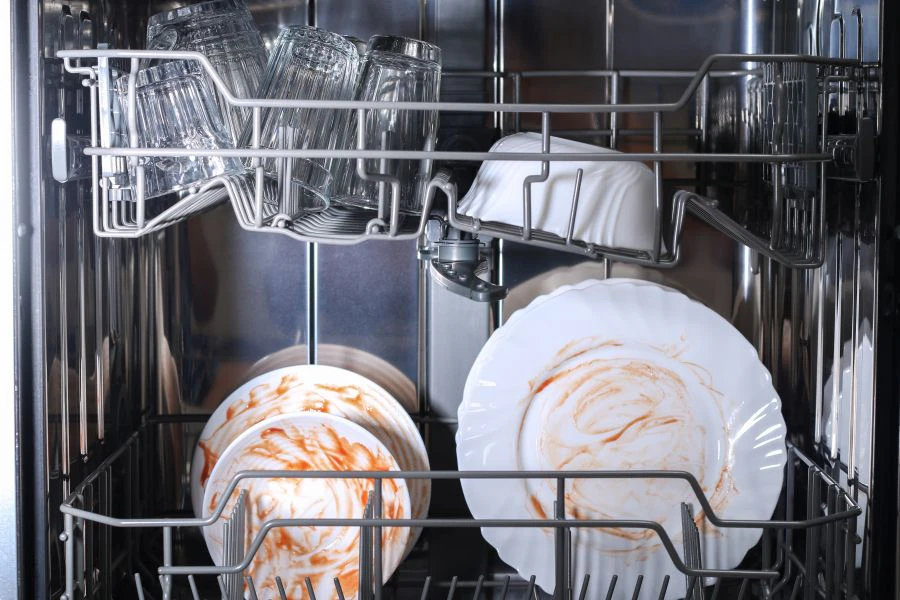
It’s tempting to think your dishwasher can handle everything — including removing stuck-on food. While it might manage, the result can be less clean dishes after the cycle. Plus, leftover food can fall to the bottom of the machine and rot if not removed.
Ideally, quickly rinse heavily soiled plates before loading them into the dishwasher — a simple step that takes seconds but can save you a lot of cleaning time later.
Position Your Cutlery Correctly
Contrary to popular belief, knives should be placed blade-down in the cutlery basket. This not only prevents injury when unloading but is also more hygienic since you’ll handle them by the handle rather than the blade. The same logic applies to forks and spoons.
Also, separate cutlery made of different materials. Don’t wash stainless-steel utensils together with silver ones — place them in separate compartments of the basket.
Be Strategic with Your Dishes
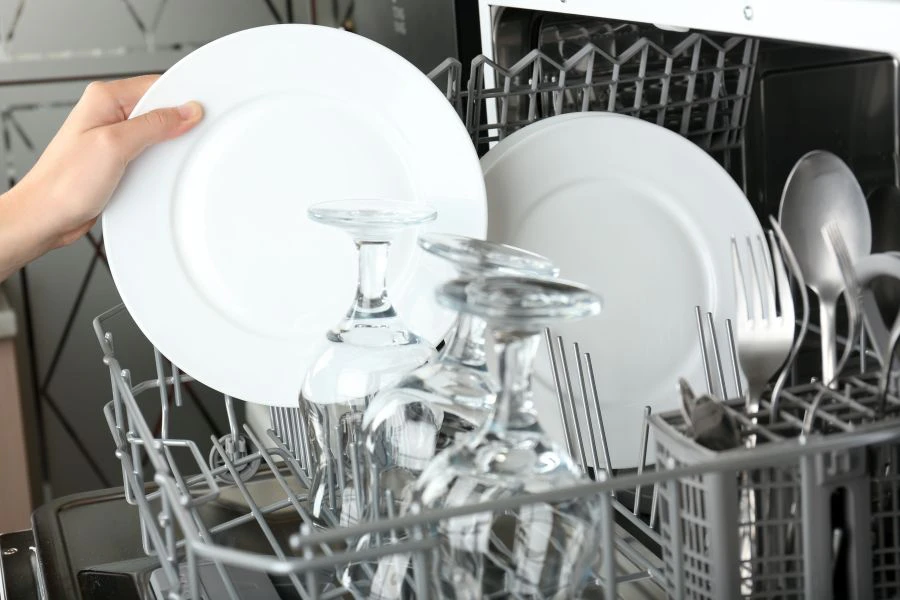
Plates should go in the designated slots and always face the center of the dishwasher for optimal cleaning. Place pans and baking dishes on the lower rack, upside down, to allow water to drain easily.
Glasses belong on the top rack, facing down to prevent water from pooling. In the center of this rack, you can place the dirtiest items, since that’s where the water jets are most powerful. For the same reason, avoid placing delicate items there — instead, find them a spot in one of the corners of the lower rack.

Check the Spray Arms
Before starting your dishwasher, make sure the spray arms can rotate freely. There are usually two: one on top and one at the bottom inside the machine. During a cycle, these arms spin and spray water over the dirty dishes.
If one arm is blocked — for example, by a protruding utensil — it can reduce cleaning efficiency and even damage the machine. Rotate each arm manually before closing the door to ensure they move freely.
Use the Right Program
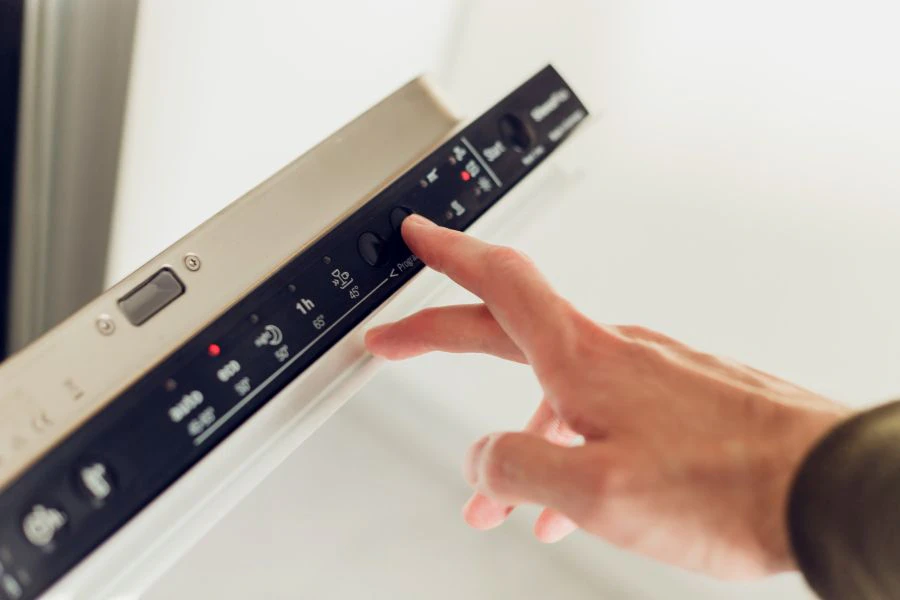
Your dishwasher likely has at least half a dozen different programs. You might be tempted to always use the same one for convenience — but that’s a mistake. Running a quick program on heavily soiled dishes can lead to disappointing results and require another wash.
Likewise, using a long cycle for everyday dishes is usually unnecessary and consumes more water and electricity. It’s best to match the program to the situation to achieve the right balance between cleanliness and efficiency. After a few weeks, you’ll likely know each program by heart!
When Unloading the Dishwasher
Do Things in the Right Order
Emptying a dishwasher is an art — especially if you want to avoid drying your dishes by hand! After the cycle finishes, open the door slightly to let the steam escape. After a few minutes, begin unloading starting with the bottom rack. This prevents water from the top rack from dripping onto the clean dishes below.
You can lift the cutlery basket and empty it directly near your drawer — a simple but very practical habit many dishwasher owners forget! Once the lower rack is empty, move on to the top one.
Add Dishwasher Salt
When your dishwasher is empty, it’s easy to access the salt compartment for the water softener. This is the perfect time to check if there’s enough salt for the next cycles. Skipping this step can lead to limescale marks on your freshly washed dishes, especially if your tap water is hard.
Ideally, use regenerating salt composed of at least 99.5% sodium chloride (NaCl) — this information is printed on the package. It’s recommended to refill the salt compartment at least once a month.
Maintaining Your Dishwasher
Perform a Full Cleaning Regularly
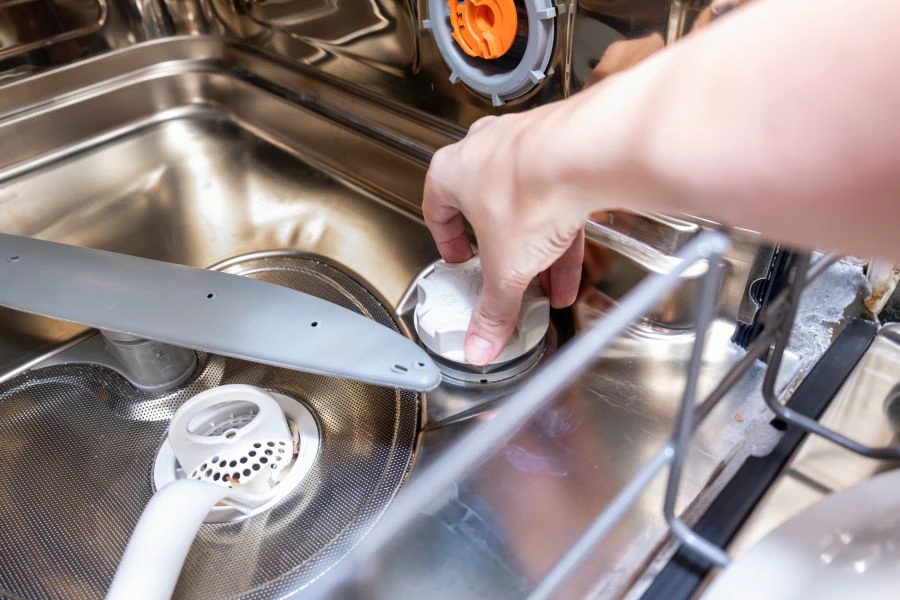
Your dishwasher cleans your dishes — but who cleans your dishwasher? You do! At least once a month, give your appliance a thorough cleaning. Empty and wash the filter at the bottom of the tub, clean and dry the door seals, and check that the holes in the spray arms aren’t clogged.
This maintenance also helps you ensure that water drains properly and that your machine has no issues. Don’t wait until your dishes come out dirty to act!

Run an Empty Cycle
Cleaning the inside of your dishwasher by hand is a chore you can easily avoid. Simply place a bowl of white vinegar on the top rack and run a long empty cycle. The vinegar will mix with the water, degrease the walls, remove buildup, and prevent limescale deposits. Once the cycle is complete, open the dishwasher door to let it dry, and use a sponge to remove any loosened residue.
With these simple tips, you’ll enjoy not only spotless dishes but also a well-maintained dishwasher with a longer lifespan — definitely worth putting them into practice right away!